

Sunday Afternoon NFL Slate: Maximizing Early Window Bets
Ask any UK punter who has properly committed to NFL betting what their Sunday looks like, and you will get a remarkably similar answer. Tea at six, kick-off at six, and a sheet that does not get tucked away until just before midnight. The American Sunday is the British evening, and that single time-zone quirk shapes how serious bettors plan, stake, and review across the season.
The Sunday slate is built around two main kick-off windows. The early window starts at 18:00 BST during the daylight-savings overlap and accounts for the bulk of the day’s games. The late window begins at 21:25 BST and runs the West Coast matchups. Together, these two windows carry roughly eighty percent of the weekly betting volume in the UK market, which makes sense in a country where roughly 290.03 million online bets are placed each month across all sports. NFL is a meaningful slice of that on Sundays.
What I always tell newer UK punters is that this is not about staying up late to chase an American product. It is about treating Sunday evening as a structured session: lines, news, stakes, settlement, and a tidy review before bed. Get that flow right and your win rate stops being random.
The 18:00 BST early window: where your sheet earns its keep
Here is the bit nobody tells you: the early window is where most of the actual money moves in the UK market. By the time the late games kick off, the lines have already been shaped by the early action, and your sharpest opportunities are usually long gone.
The early window typically holds between eight and eleven games on a standard weekend. Most start at the same minute on the dot, which means you cannot watch them all properly. The UK punter who tries to follow every drive ends up watching none of them well. Pick two or three games where you have a position, leave the RedZone feed for the rest, and trust your pre-game work.
I build my early sheet on Saturday night. By Sunday lunchtime I am only looking at three things: late-breaking injury news, weather updates for outdoor venues, and any sudden line movement of half a point or more. If a spread has moved from -3 to -3.5 between Saturday close and Sunday breakfast, that movement tells me something about where the sharp money is going. Whether I follow it or fade it depends on the matchup, but I never ignore it.
One discipline I have built over the years: I never place an early-window bet after 17:30 BST. Anything I am still debating thirty minutes before kick-off is a sign I have not done the work, and a rushed stake at -110 is exactly the kind of bet that erodes a bankroll. Remember, you need to win 52.38 percent of those -110 bets just to break even before you have made a penny of profit. Half-baked plays do not clear that bar.
The 21:25 BST late window: smaller slate, sharper opportunities
The late window is a different animal. Usually two to four games, often involving West Coast sides like the Rams, 49ers, Chargers, Seahawks, or Cardinals. The slate is smaller, the sportsbook attention is more concentrated, and the lines tend to be tighter by the time you sit down with a fresh cup.
Smaller slate means less noise but also less margin for error. With only three games to choose from, the temptation is to force a position on every one of them. That is the cardinal sin of the late window. Some weeks you genuinely have no edge on any late game, and the correct answer is to watch and not stake.
What I do find useful about the late window is the live-betting opportunity it offers. Because the early games have already played out, books and punters alike have updated information on injuries, weather, and form. If you have done your homework, you can use the late window for in-play positions on totals or live spreads that have shifted based on early results affecting projected playoff seeding or rest-day matchups.
The other angle: rest disadvantage. West Coast teams playing in the late window have effectively played at their normal afternoon body clock, while East Coast visitors are running on a longer day. This shows up most strongly in second-half totals, not pre-game lines.
When Sunday Night Football overlaps your slate
Sunday Night Football is technically a separate window – it kicks off at 01:20 BST, deep into Monday morning – but it sits on top of your Sunday slate in two ways that matter, and ignoring this overlap costs punters money every single week.
The first overlap is bankroll-related. You have just spent six hours sweating early and late window bets. The cognitive load is real. Watching a fourth-quarter collapse in a 21:25 BST game and then trying to make a clear-headed decision on the SNF spread at half past midnight is asking a tired brain to do precise work. Most of the time, it will not.
The second overlap is informational. SNF is the marquee Sunday matchup, and the line on it has been studied by sharps all week. By Sunday evening, that line is about as efficient as any number you will see across the slate. The chance of you finding a genuine edge at 00:30 BST that twenty professional handicappers have missed is small. Combine that with cognitive fatigue and you have the perfect recipe for a bad bet.
My personal rule: I treat SNF as Monday-morning business if I am going to bet it at all. I place the stake at Saturday close or skip it. By Sunday evening I am settling and reviewing, not opening new positions. Picture how Warren Sharp’s totals model has performed over the long haul, where the editorial line of record at Sharp Football Analysis describes “no other NFL analyst” with that track record and 62.6 percent on totals across more than 1,100 recommendations across two decades. That kind of long-term edge is only possible because the work is done well before kick-off, not during a tired late-night impulse.
If you do bet SNF live, cap the stake. Whatever your standard unit is on a planned bet, halve it for any in-play SNF position taken after 23:00 BST. The brain at midnight is not the brain you used to build your weekly sheet.
How bye weeks bend the slate
Every week from week 5 through week 14 of the regular season, four to six teams are on bye. That sounds like trivia, but it changes the shape of your Sunday in ways that most casual punters never properly account for.
Fewer teams playing means fewer games. A normal Sunday with thirteen games becomes a ten-game Sunday during heavy bye weeks. The early window contracts hardest, sometimes down to six or seven matchups. That concentrates betting volume on a smaller pool and tightens lines accordingly. Your shopping advantage shrinks.
Bye weeks also create rest mismatches. A team coming off bye facing an opponent on a short week has a measurable conditioning and preparation edge, and books price that in. The question is whether they price it correctly. Historically, post-bye teams have outperformed against the spread, but the edge has shrunk as the market has caught up over the last decade.
One angle I do keep on my radar: a post-bye team playing a divisional opponent. The extra week of preparation against a familiar foe shows up in second-half adjustments more than first-half scoring. If you are betting halftime spreads or second-half totals, that is where the bye-week edge still lives. Just do not stake it heavily on first-half or full-game lines, because that is exactly where the market efficiency is highest.
Building a UK Sunday sheet that actually survives the evening
By Sunday lunchtime my sheet is essentially locked. Anything I am adding between 14:00 and 17:00 BST has to clear a higher bar than what I set on Saturday night, because the closer to kick-off you are, the more emotional the decision tends to be.
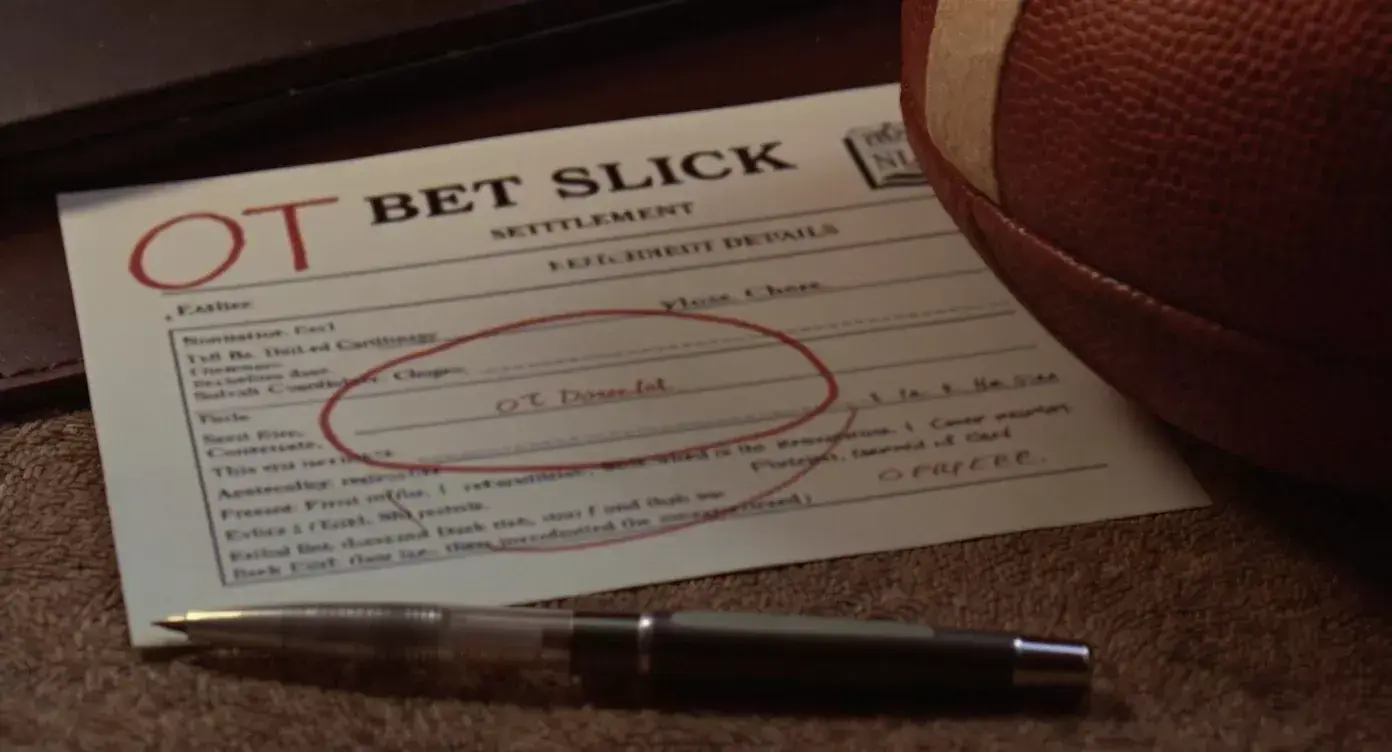
The structure I use: top of the page is early window with games listed in kick-off order, stake column, line taken, and current line. Below that, late window in the same format. SNF at the bottom, usually crossed out. I print it. I do not work from a phone screen for the Sunday session, because the small screen invites scrolling, and scrolling invites tinkering, and tinkering on Sundays is how bankrolls get eroded.
The flow I work to is intake, monitor, settle. Intake is locking the sheet by 17:30 BST. Monitor is the 18:00 to 23:00 window where I am watching games and updating outcomes. Settle is the post-game review where I write three sentences per bet on what I got right, what I got wrong, and what I would do differently. Three sentences. Not an essay. Just enough to track patterns across a season.
If you want to take this further, the page on how to read an NFL line sheet from a UK perspective walks through the mechanics of decoding rotation numbers, spread notation, and totals on the printed sheet itself. That foundational read pairs well with the Sunday flow I have just described – one gives you the day-of structure, the other gives you the literacy to read the page in front of you.
Last thing on Sunday sheets: review the whole sheet at the end of the night, even on losing days. Especially on losing days. The temptation is to close the laptop after a tough late window and deal with it Monday. Do the review while the games are fresh. The discipline of a five-minute Sunday-night review compounds over a seventeen-week season in ways that no fancy model can replace.
