

The week your kickoff time stops being 18:00 BST
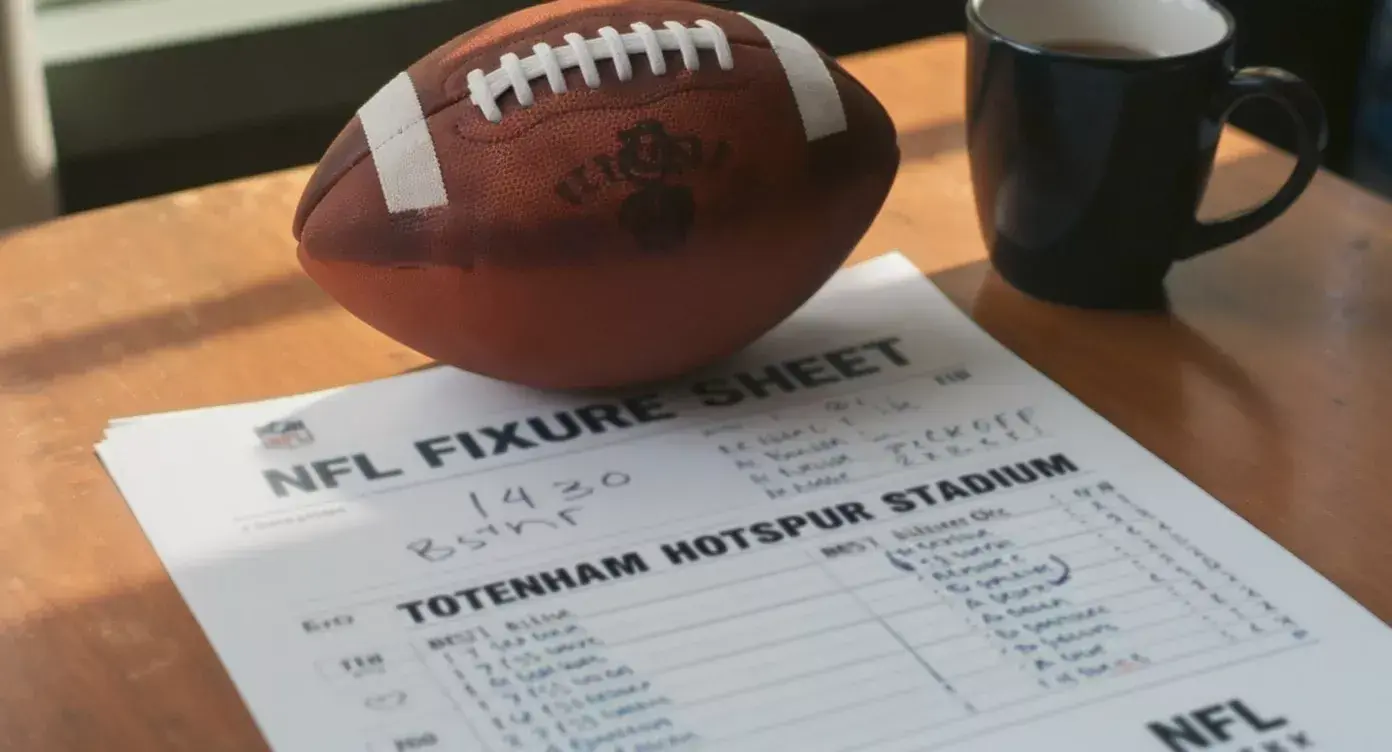
Six in the morning is the normal UK NFL kick-off. Coffee in hand, blinds half-drawn, the Sunday slate has not yet started rolling in. London Games change that completely. A 14:30 BST kick-off at Wembley or Tottenham is a different experience – daylight, breakfast already eaten, the kind of betting afternoon that fits a normal Saturday rhythm. The 2026 season delivers three London Games out of nine international fixtures, the highest concentration the city has ever hosted, and the sheet that handles them looks structurally different from the regular weekly version.
This piece focuses on the London-specific betting context. Not the general international calendar, not the broader question of how international games slot into NFL competitiveness, just the three or four UK fixtures and what makes them different from a punter’s perspective. Schedule, time-zone implications, travel fatigue, UK bookmaker promotions, and the historical ATS pattern London Games have produced over the seventeen years since the series started.
Three fixtures across two stadiums in 2026
The 2026 NFL season carries a record nine international games, with three in London split across Wembley and Tottenham Hotspur Stadium. That schedule represents a step up from previous years and reflects sustained UK demand – Henry Hodgson, general manager of NFL UK and Ireland, framed the strategy by saying that “growing the league and the game internationally is a major strategic priority for the NFL” and that “we have played games in London since 2007 and the interest and demand for tickets is stronger than ever.”
Wembley typically takes the larger-capacity fixture. The 2025 series produced the most-attended NFL international series game on record at Wembley with 86,152 fans watching Los Angeles Rams against Jacksonville Jaguars – the highest attendance figure the international series has ever produced. Tottenham Hotspur Stadium, purpose-built with a retractable NFL pitch surface underneath the football turf, hosts the more atmospheric fixtures and tends to attract teams with strong UK fanbases.
The 2025 NFL International Games on NFL Network averaged 6.2 million viewers across six games – the most-watched international-game season average on record, up 32 percent year on year. That growth feeds the bookmaker view of London Games as a high-volume opportunity, and the promotional spend around these fixtures from UK operators has scaled accordingly. Punters can expect enhanced markets, promoted odds and acca-insurance offers specifically tied to the London slate, which sometimes shifts the value calculation in their favour.
The time-zone advantage UK punters actually have
A 14:30 BST kick-off at Wembley sits in the punter’s normal Saturday-shopping window, not in the early Sunday morning slot where most NFL action lives. That difference is more meaningful than it sounds. Lines for a London Game are usually fully developed by Friday lunchtime, with the late-information window – injury reports, weather forecasts, starting-QB confirmations – falling neatly inside the UK working day rather than during the small hours.
The structural implication for line-shopping is that London Games reward earlier preparation. The price you find Saturday morning is essentially the price you will find at kick-off, because the move that would normally happen Sunday morning UK time happens Saturday afternoon UK time for the London fixture instead. Punters who treat London Games like regular Sunday slate games and shop late in the cycle often find the lines have already settled.
The other time-zone benefit is in-play. A 14:30 BST kick-off means the entire game runs through a normal UK afternoon, with in-play markets fully active when you are most likely to be paying attention. Live cashout, halftime spreads, race-to-X-points and quarter-by-quarter prop refreshes are all easier to engage with on a London Game than on the standard 23:00 BST Monday Night Football slot.
Travel fatigue and the handicap adjustment that almost never gets priced
The team flying east into London plays the game roughly 24 hours after a five-to-eight-hour flight from the US. The team designated as the home team for the fixture sometimes flies in the same week and sometimes flies in the previous week to acclimatise. The difference between those preparation patterns matters for the actual on-field performance, and the spread sometimes captures it imperfectly.
Historical analysis of London Games suggests teams flying in late on the Thursday or Friday before a Sunday kick-off underperform their expected spread coverage by a meaningful margin. The mechanism is mundane – jet lag, schedule disruption, unfamiliar accommodation – but the cumulative effect on a single Sunday is real. The 2019 Tottenham London Games were 12 times oversubscribed, sold out in 45 minutes, and the spread for those fixtures was set at numbers that did not fully account for the visiting team’s travel preparation patterns.
The bookmakers know this. They have access to the same historical data, and the spreads have tightened in recent seasons to reflect it. The structural edge that existed in the late 2010s – backing the team with better travel preparation against a spread that ignored the variable – has narrowed substantially. The remaining edge sits in fixture-specific analysis: which team has the longer flight, which team is making their second or third London appearance, which team has invested in pre-trip acclimatisation, which is making the trip cold.
The factor compounds with the home/away question, because London Games disrupt the normal home-field-advantage calculation entirely. The home team is the home team only in a paperwork sense – they are playing in a neutral stadium against a similarly displaced opponent. The traditional two-to-three points of home-field advantage that the spread typically carries for an NFL fixture either disappears or operates at a fraction of its normal weight. Punters who want to dig deeper into the home/away mechanic can find the broader breakdown in my home and away splits for UK NFL bettors.
UK bookmaker promotions designed around the London week
UKGC-licensed firms run promotional campaigns specifically tied to London Game weeks. The standard package includes enhanced spreads (a favourite priced at 4/5 instead of 10/11 for a limited time), enhanced moneyline odds on selected players to score an anytime touchdown, acca insurance for two-leg accumulators involving the London Game, and free-bet matches on first deposits during the relevant week.
The promotions are real value when they hit the markets you would have bet anyway. They are not value if they distort your selection process – punters who back a side specifically because the bookmaker is offering enhanced odds on that side often find the enhancement is priced to attract action on the public side, not to reward sharp betting. The enhanced 4/5 on the public favourite is almost always paired with a wider-than-normal price on the underdog, because the bookmaker is trying to balance their book toward the side they expect public money to ignore.
Each NFL London Game brings approximately £6.1 million in economic value to the city through tourism, hospitality and local spending, and a slice of that economic activity flows into the broader UK gambling sector through promotional volume. Punters who pay attention to which promotions are actually competitive – versus which are marketing dressing – can extract meaningful value from London Game weeks specifically, and the enhanced-odds market on UK bookmakers tends to be at its most generous during these fixtures.
What the historical ATS record actually shows
London Games have produced a slightly under-the-total tendency across their seventeen-year history, with the average total under-cashing more often than the over. The mechanism is part travel-related and part stadium-related – both Wembley and Tottenham produce game-flow patterns slightly different from typical NFL stadiums, with longer field goals, marginally lower-scoring offences in the second half, and a higher rate of conservative late-game playcalling.
The ATS record favours underdogs marginally over the long run, but the sample is small – fewer than fifty London Games have been played to date – and the variance over that sample is wide enough that the trend cannot be treated as bankable. A punter betting blindly on the London Game underdog every year would have produced a small positive return through 2023, but the trend has compressed in the past two seasons as the bookmakers have adjusted their spread setting.
The more reliable historical observation is the in-game flow. London Games tend to start slowly, with both teams adjusting to the unfamiliar environment, and the first-half totals come in under the line more often than full-game totals do. The race-to-X-points markets in the first quarter have produced returns favouring the under across the available sample. Whether those patterns are exploitable depends on whether the bookmaker prices them in advance – and the short answer is that the better-priced operators have caught up, while the marketing-driven operators sometimes leave value on the first-half total.
The combined effect across these factors is that London Games are interesting fixtures for UK punters not because they are systematically mispriced, but because the unusual context creates fixture-specific edges that disciplined research can identify. Each London weekend is its own analytical problem, not a repeating pattern to back blindly.
