

Three points of margin, two different outcomes
Cowboys minus three and Cowboys minus two-and-a-half look almost identical on paper. They are not. A Cowboys win by exactly three points pushes the first ticket and wins the second. The same game, the same teams, the same final scoreboard – one bet returns your stake, the other doubles it. That gap is the entire reason serious UK punters keep three apps open during the NFL week. Line shopping is the discipline of comparing prices on the same fixture across UKGC-licensed operators in real time, and a half-point difference at one of the key numbers separates a profitable season from a break-even one.
This piece stays narrow on the act of shopping itself. Not bookmaker reviews, not reverse line movement, not the general odds market. Just the routine: why half-points matter, how to run a multi-operator check without losing your morning, which aggregators help and which create noise, the difference between mobile and desktop workflows, and when in the week to start the comparison. The UK remote betting market hit £2.6 billion in gross gambling yield in the year to March 2025, and a slice of that revenue exists precisely because most punters do not shop their lines. Closing the gap is mostly habit.
Half-points and the maths that justifies the effort
Margin distribution makes line shopping worthwhile. Since the 2003 NFL season, 14.8 percent of all games have finished with a 3-point margin, and an even higher share land on margins of seven, ten, six and four. A spread of minus three at one bookmaker versus minus two-and-a-half at another is the difference between losing the push and winning outright in roughly one game out of seven. That hit rate makes line shopping the single highest-leverage habit a UK NFL punter can develop.
The same logic applies across all the key margin clusters, not just three. A spread of plus seven at one operator versus plus seven-and-a-half at another covers the difference on any seven-point win. A total of 45.5 versus a total of 46 changes the outcome on any game that lands at exactly 46 points. None of these gaps look huge on a single Sunday, but compounded across the seventeen-game regular season and into the playoffs, the difference between a punter who shops every line and a punter who books with one operator out of habit usually works out at two to four percentage points of return on investment per season.
Bill Miller, the president of the American Gaming Association, summed up the underlying market reality at the start of 2026 by noting that “no single event brings fans together like the Super Bowl, and this record figure shows just how much Americans enjoy sports betting as part of the experience” – which gives you a sense of how deep the cross-Atlantic price competition runs. UK operators feel that competitive pressure on their NFL menus, and the prices reflect it.
Building a three-bookmaker routine without losing your Saturday
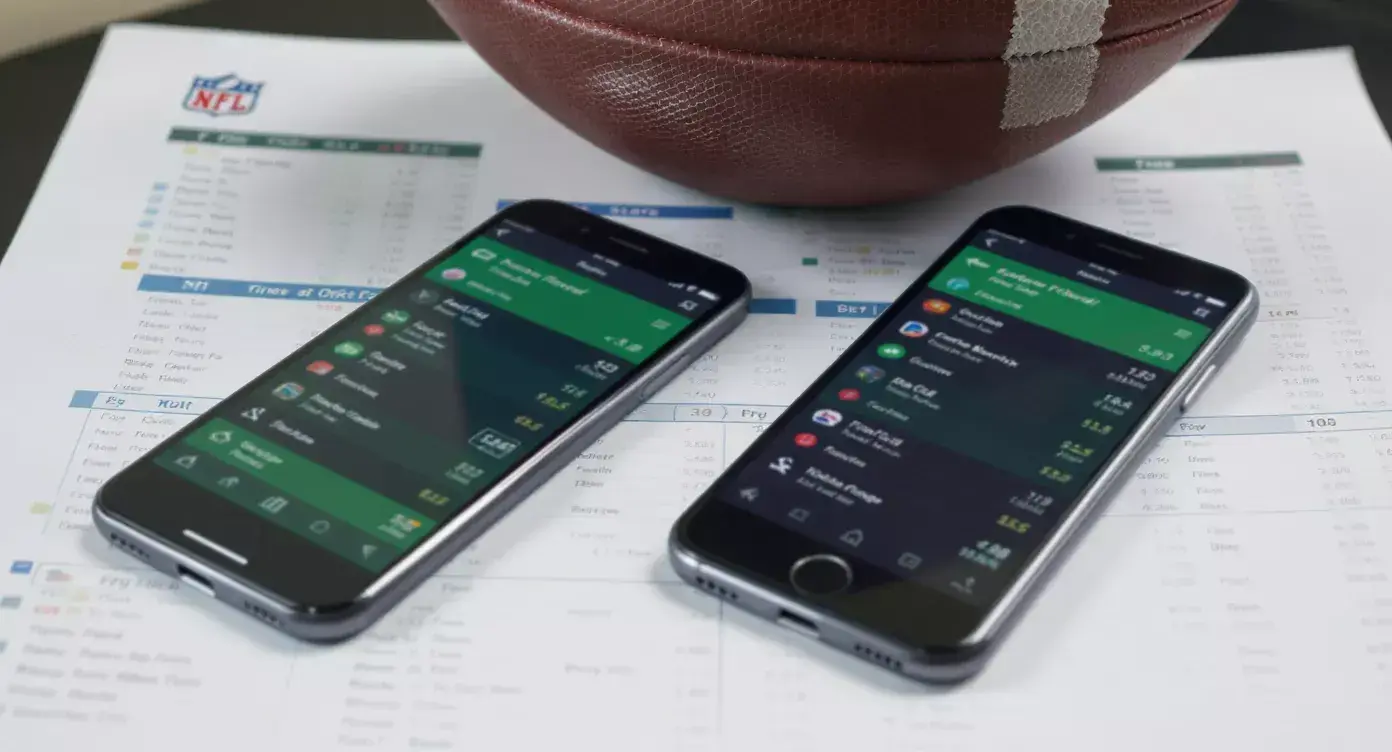
Line shopping at three operators per fixture sounds time-consuming until you set up the workflow properly. Mine takes about twelve minutes for a sixteen-game Sunday slate, and the only equipment is three browser tabs open to three UKGC-licensed firms with the NFL fixture list on each.
The routine runs in three passes. First pass, write down the spread at operator one across all sixteen games, in a single column on a paper sheet or a Google Sheets row. Second pass, do the same at operator two. Third pass, operator three. Now you have three columns next to each fixture, and the best price for the side you want to back jumps off the page. The whole thing takes the time it takes to scroll three fixture lists.
The trick is consistency. I always check the same three operators in the same order, because the brain learns to scan a sixteen-game list faster when the layout is familiar. I always check the spread first, then the total, then the moneyline if I am betting it. And I always record the timestamp at the top of the sheet, because half an hour later the lines will have moved and I want to know whether the prices I am comparing are from the same window.
Three operators is the sweet spot. Two does not give enough variance to find meaningful gaps. Four or more increases the noise without much added value – the prices at the four sharpest UK firms tend to cluster within a half-point of each other most of the time, and you reach diminishing returns past the third comparison. The only exception is during Super Bowl week, when prop markets multiply and the variance between books opens up enough to justify checking four or five operators on the headline props.
Aggregators are useful, but only as a sanity check
UK odds aggregators exist, and a few of them cover the NFL with passable depth. Their value is real but limited: they give you a fast snapshot of the spread, total and moneyline at five or six operators on a single screen, which compresses the three-pass routine into a single glance.
The limitations are also real. Aggregators scrape prices on a delay, sometimes thirty seconds, sometimes five minutes. The headline number you see may not be the price actually available when you click through to the bookmaker app, and a fast-moving market can shift the line in the time it takes to navigate to place the bet. Aggregators also have patchy coverage of secondary markets – first-half spreads, team totals, alt-spread ladders – and the props menus are almost never aggregated reliably.
I use aggregators for two specific purposes. First, as a starting point on Saturday morning when I want to see the rough spread distribution across the market in thirty seconds before doing my own three-operator check. Second, as a sanity test when I think I have found an unusual price at one operator – if the aggregator confirms that price is significantly different from the consensus, the price is either a genuine edge or a stale number. Either is worth investigating. If you want to go deeper on which UK bookmakers actually price NFL most consistently, my breakdown of UK bookmaker NFL markets covers the operator-by-operator detail.
Phone in one hand, paper sheet in the other
Mobile versus desktop is not a religious question in line shopping. Both work. The actual question is which one fits the time of day you are shopping. Saturday morning at the kitchen table favours desktop – three browser tabs across a single screen, faster keyboard navigation between operator fixture lists, easier copying into a spreadsheet. Sunday afternoon when the early window is about to kick off favours mobile – you are likely already on the sofa, the apps load faster than a mobile browser, and the bet placement flow on Sky Bet or William Hill native apps is genuinely smoother than the desktop equivalent.
The mobile workflow has one structural issue: switching between apps is slower than switching between browser tabs. Each app re-loads its fixture list from scratch when you open it, which adds two or three seconds per operator per game. Across sixteen games and three operators, that is two minutes of waiting you do not have on desktop. The fix is to do your morning comparison on desktop and your bet placement on mobile – which fits most punters’ Sunday rhythms anyway.
The other mobile-specific trap is that small screens make small differences hard to spot. A minus three versus a minus two-and-a-half on a 4.7-inch iPhone screen sometimes looks identical at a glance, particularly if the operator uses cramped fonts or hides the spread behind a tap. I always verify the exact spread on a desktop-sized screen before placing a meaningful stake, even if I close the bet on mobile.
Tuesday morning versus Sunday morning
The timing of your shop matters more than the platform. Lines open Tuesday morning UK time when the syndicate posts the week’s spreads, and they evolve continuously until kick-off. Different windows favour different shopping strategies.
Tuesday and Wednesday are when sharp money hits the market first. The lines move fastest during these two days, and the prices available reflect the bookmakers’ opening assessment combined with early professional action. If you are a sharp punter with an opinion you arrived at independently, this is the window where you have the best chance of beating the closing line – but it also requires conviction, because the price you take might look bad by Sunday morning if late information moves the market against you.
Thursday through Saturday lunchtime is the public-money window. The dollars start flowing in larger volume, lines steady down to their mid-week consensus, and the prices reflect a more settled view. Line shopping during this window tends to be about catching small operator-by-operator variances rather than capturing big information edges.
Sunday morning is the close-out shop. Late injury news, weather updates and pre-game adjustments all hit between Saturday evening and Sunday lunchtime. The price you can get an hour before kick-off is often the best of the week for the side that closed on – and often the worst for the side that closed against. Shopping aggressively in the final two hours before the early window catches the most current information, but it also requires you to have done your handicap work earlier so that you are not making rushed decisions under time pressure.
