

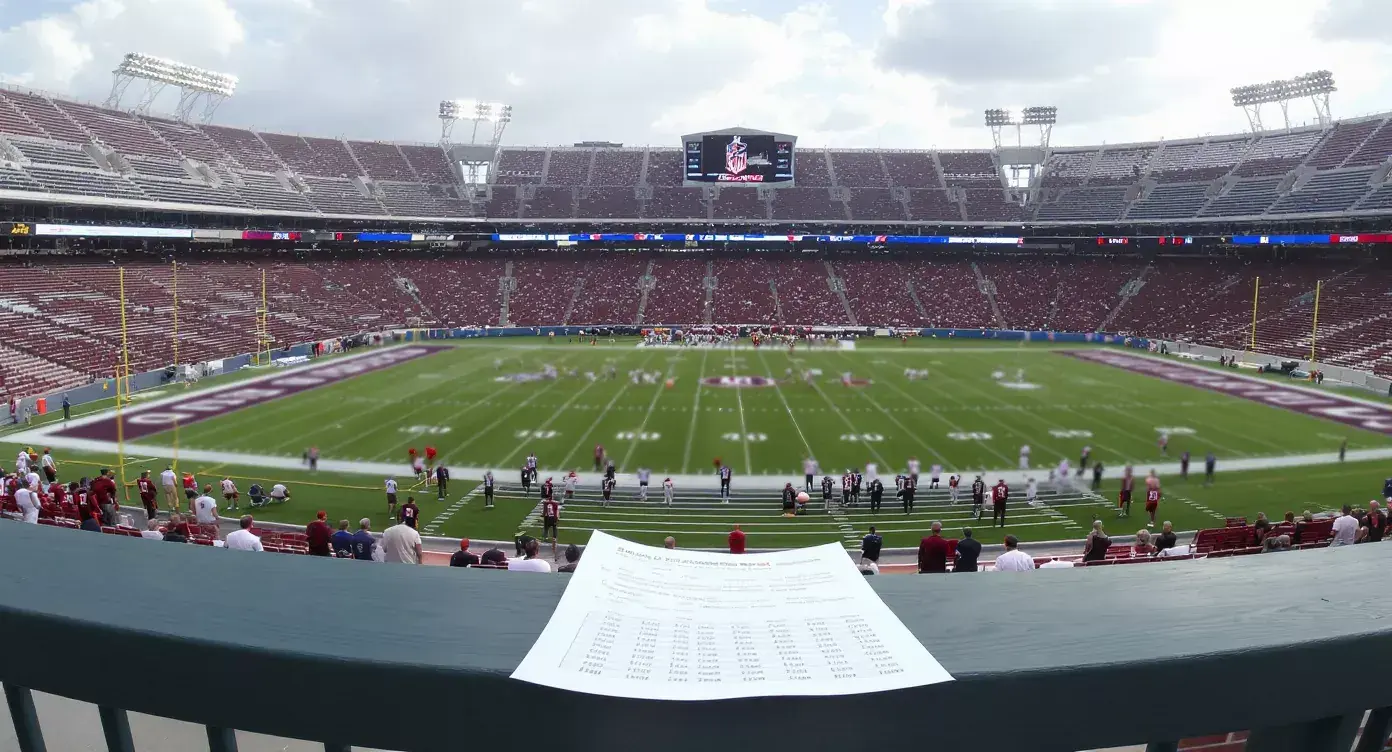
The window most punters ignore
NFL preseason runs for three games in mid-to-late August before the regular season kicks off in early September. The UK punter who only follows regular-season betting will glance at preseason lines, see the unfamiliar names on starting rosters, and click away. That instinct is broadly correct for casual betting – preseason is genuinely noisy and emotionally difficult to bet – but the structural betting characteristics of the preseason are interesting enough that a small subset of UK punters reliably extract value from these games every August.
This piece is strictly about preseason betting on UK books. It is not about regular-season strategy, not about playoffs, and not about Super Bowl-time speculation. The narrow question is: what is preseason actually for from a football perspective, how do UK bookmakers price it, where do the information edges sit, and how should disciplined UK punters approach the August window?
The volume context matters for understanding the market structure. UK remote gambling generated £2.6 billion in gross gambling yield in the most recent reporting year, with online gross gambling yield growing roughly 7 percent year over year. NFL preseason represents a fractional share of that pot – perhaps less than half a percent in aggregate – and that low-volume environment is what produces the wider overrounds and thinner line discipline that characterise the preseason product on UK books.
What preseason actually is from a football perspective
Preseason exists for three football purposes that have minimal overlap with regular-season competitive priorities. First, it gives coaches a chance to evaluate the bottom of their rosters – players competing for the final spots on the 53-man roster who need live-game film to demonstrate their value. Second, it provides starters with reduced-pressure repetitions to install offensive and defensive concepts before the season begins. Third, it serves as a revenue and broadcast event for the league and its venues.
The competitive structure of preseason games is markedly different from the regular season. Starters typically play limited snaps – the first preseason game often features starters for one drive or none at all, the second preseason game might give them a half, and the third preseason game (often the closest dress rehearsal) usually sees starters playing the first half and giving way to backups. By the fourth preseason game (where applicable in recent format eras), the starters are usually inactive entirely.
The implication for betting is that the rosters that play the second halves of preseason games are not the same rosters that will play in week 1 of the regular season. Backup quarterbacks throwing to fourth-string receivers face third-string defences. The play-calling is conservative on both sides because coaches do not want to show their actual schemes. The result is football that physically resembles the NFL product but does not predict NFL outcomes.
The injury risk in preseason has produced ongoing structural debate within the league about its format. The recent shift to three preseason games (down from four) reflects the league’s effort to balance evaluation needs against injury risk to key players. UK punters should be aware that preseason games can produce injury news that materially affects regular-season betting later – a starting receiver tearing an ACL in a preseason game shifts regular-season player-prop pricing dramatically.
Why preseason lines are thin and what that means
UK bookmakers price preseason games with overrounds in the 8 to 10 percent range, substantially wider than the 4 to 5 percent overround on regular-season games. The reasons sit in low volume and high uncertainty. Bookmakers protect themselves from sharp money on illiquid markets by widening margins. Casual money is the dominant flow on preseason games, and casual money is generally unprofitable for the bookmaker only when the market is sharp; when the market is volatile and uncertain, casual money is profitable and the bookmaker can afford to be aggressive with pricing.
The line itself moves differently in preseason than in regular season. Regular-season lines move on injury news and sharp money; preseason lines move on roster-cut announcements and on the published depth-chart shifts that signal which players will see snaps. A starting quarterback who is announced as inactive for the third preseason game shifts the line dramatically because the implied probability of him playing meaningfully shifts to zero.
The hold percentage on preseason totals runs similar to spreads but with more variance in how the line moves through the week. A preseason total that opens at 35 might drift to 32 by kick-off if coaches signal short starter usage, or might rise to 38 if signal suggests full starter usage. The line is responding to information that has no analogue in regular-season betting.
For UK punters the practical implication is that preseason is not a “throw on your usual stake” environment. It is a low-volume, high-overround, high-variance market that requires either very small stakes (entertainment betting) or very specific information edges (sharp betting). The middle ground – moderate stakes on a casual read of the matchup – is the territory where bookmakers consistently extract value from punters.
The information edges in preseason
The structural edges in preseason betting are information-based, not modelling-based. The two consistent sources of profitable insight are roster-cut news and snap-count expectations from coaches’ public statements. Both are available to disciplined punters who pay attention to off-season news cycles, and both move the line in predictable ways.
Roster-cut news arrives in waves before each preseason game. Teams trim their rosters on specified dates – initially from 90 players to 75 before the second preseason game, then to 53 before the regular season opens. The published cuts reveal which depth-chart positions are settled and which remain competitive. Cuts at quarterback or running back especially matter for preseason betting because they determine which players will see the relevant snaps in the upcoming games.
Snap-count expectations from coaches are the second information source. Head coaches generally make public statements before each preseason game about how they expect to deploy starters. Some coaches are explicit about target snap counts; others are vaguer. The market reads these statements within hours of publication. UK punters who monitor coach press conferences on the Wednesday and Thursday before each preseason game can position themselves before the line fully adjusts.
The depth-chart shifts also matter. Teams publish official depth charts before each preseason game, and changes between depth chart and the prior published version reveal where competition has been resolved or shifted. A backup quarterback moving from third to second on the depth chart suggests his role in upcoming games will expand, and his player-prop pricing should reflect that – but often does not yet, because the market lags depth-chart news.
The Hard Knocks effect – the HBO documentary series that follows a specific team through preseason – produces additional information leaks for that team’s preseason betting. Punters who watch Hard Knocks or read its weekly recaps can sometimes catch on-screen information about player evaluations that the broader betting market has not fully processed. The information edge is small and time-limited but it is real for the seasons the show is filmed.
UK bookmakers offering preseason markets
Major UK bookmakers offering NFL preseason markets include bet365, William Hill, Sky Bet, and Paddy Power. bet365 is typically the most comprehensive, offering spreads, totals, and moneylines on every preseason game with at least some prop coverage on featured matchups. William Hill and Sky Bet offer the headline markets but shallower prop depth. Paddy Power has been variable in preseason coverage – covering some weeks deeply and others thinly, depending on operational priorities.
The depth of preseason market coverage varies meaningfully across operators. Some books offer alternative spreads and totals on every preseason game; others offer only the standard line. Player props on preseason games are rare on all UK operators – the volume does not justify the trading desk attention. UK punters who want to bet preseason player props on, say, a specific backup quarterback’s passing yards should expect to find that market available on perhaps one or two books only.
The deeper coverage of which UK operators handle which NFL markets at what depth sits in the page on UK bookmakers and their NFL market coverage. That coverage walks through the operator-by-operator picture in detail and is the natural companion to anything you read here about preseason specifically.
The exchange product on preseason – Betfair Exchange – typically has thin liquidity, with NFL preseason markets sometimes showing no active volume on either side of the standard spread. Punters wanting to use the exchange for preseason should expect to be working in a low-liquidity environment where their order placement will move the price.
The recommendation for UK punters new to preseason betting is to stick with the major bookmakers offering standard markets at standard depths. The structural edges in preseason are not large enough to justify trading complex products on thin markets. The standard spread and total are the cleanest entry points.
Bankroll discipline through August
The bankroll discipline question on preseason is the same as on regular season: stake sizes should reflect both the edge available and the variance of the matchup. The difference is that preseason has higher variance and lower edge per unit of staked pounds than regular season. The implication is that stake sizes should be smaller – substantially smaller – than regular-season stakes for the same punter.
A reasonable rule of thumb is to allocate no more than 5 percent of regular-season weekly stakes to preseason betting in total. If you stake £100 per weekend during the regular season, preseason should account for no more than £5 to £10 per game across the August window. The variance of preseason outcomes means even successful preseason betting will be a small contributor to overall annual returns.
The temptation to over-stake on preseason because the lines look beatable is a common error. The bookmaker’s overround of 8 to 10 percent on preseason markets is the structural cost that has to be overcome before any apparent value can be realised. A bet that you estimate has a 55 percent chance of winning at 10/11 odds carries positive expected value before overround but is right at the break-even line after overround. Preseason bets that look like clear winners often turn out to be marginal value plays once the overround is honestly accounted for.
The discipline that works for committed preseason punters is to set a per-game maximum stake at the start of August, track results across all preseason games, and treat the August window as either a small standalone profit centre or a small contribution to the broader season’s bankroll. Treating it as a meaningful portion of annual betting strategy is a path to overpaying for entertainment.
