

Tracking Sportsbook IDs: Using Rotation Numbers for Buffalo Bets
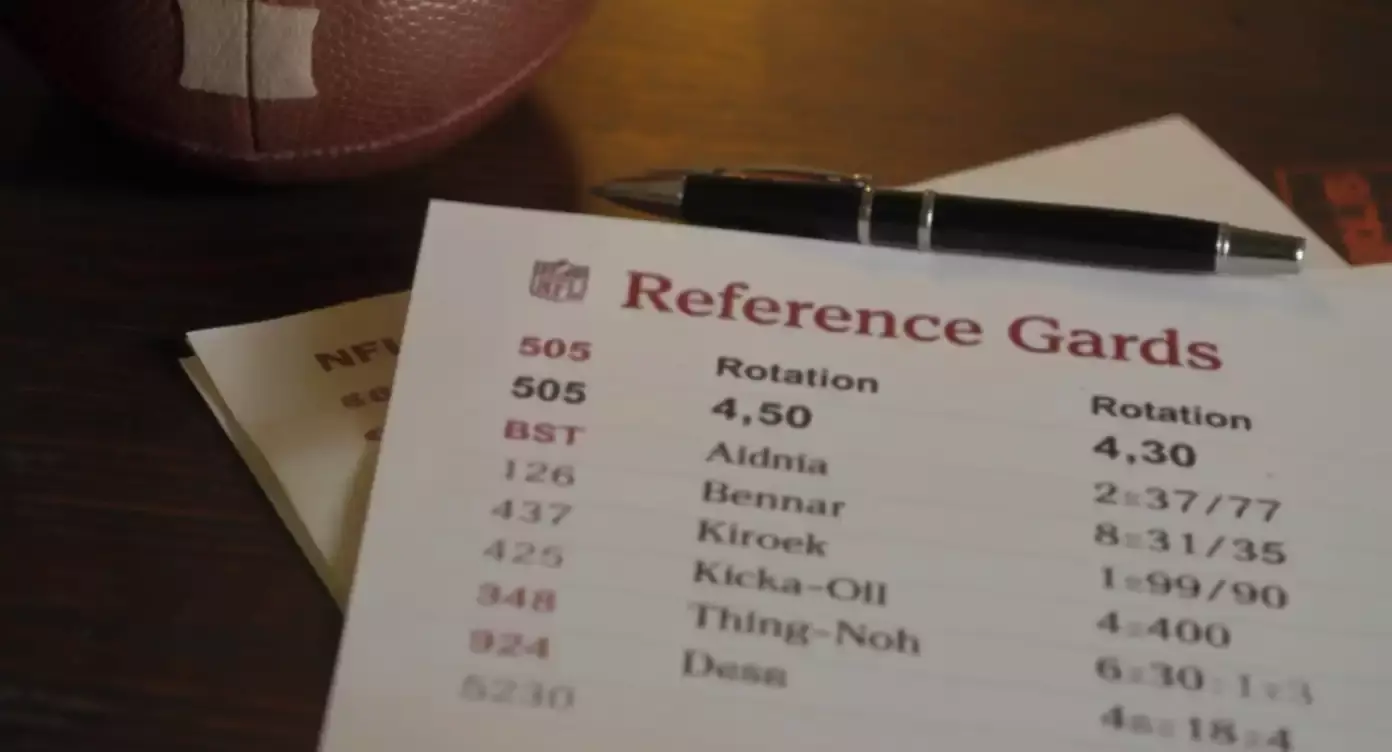
The first time someone hands you a US line sheet, you see a four-digit number sitting where the team name should be – 505 Dolphins, 506 Bills – and the instinct is to ignore it as printer junk. I did the same in 2018, scribbled my picks on a Wembley game next to the team logos, then spent twenty minutes on the phone to a Las Vegas service trying to confirm I had taken the right side. The rotation number is the only thing that gets you past that confusion, because every staff member on every line desk – from Pinnacle to William Hill’s trading floor – uses it as the unique ID for that single game in that single week.
What I want to do in this piece is keep the lens narrow. We are not reading the whole sheet here, not converting odds and not chasing line movement. Just the four-digit code: where it comes from, how the league assigns it, why the favourite always carries the even number, and what changes when you switch from a paper sheet to a UK bookmaker’s app. By the time you finish, you will be able to glance at 506 and know – without a team name in sight – that the Buffalo Bills are the home favourite that week.
How a 1970s phone-line shortcut became a global standard
I once asked a retired Stardust line manager what came first, the rotation number or the spread, and he laughed at me. Rotation numbers came first by about a decade – they were a switchboard fix, not a betting innovation. Before computers, every casino in Nevada wrote down lines by hand, and a clerk in Reno reading a number to a clerk in Vegas would lose three minutes saying “Tampa Bay at New York Jets” before getting to the price.
The Las Vegas Stardust developed the system in the 1970s, assigning each game a sequential four-digit code so that traders could rattle off “506, minus seven, fifty-one” in under five seconds. The code stuck because everyone wanted the speed. By the 1980s, the Vegas Stardust line was syndicated through Roxy Roxborough and Las Vegas Sports Consultants, who codified the numbering rules: home team gets the higher number, favourite gets the even slot, and the entire week’s slate runs in numerical order from earliest kick-off to latest.
That convention crossed the Atlantic intact. When UK punters opened their first Stateside line sheet – usually photocopied from a Reno-printed weekly – the four-digit codes came with it. UKGC-licensed firms now feed off the same back-end syndication, even if they hide the numbers in their consumer apps.
The Tuesday morning when the week’s numbers are minted
Picture the trading floor on a Tuesday in early September. The previous week’s slate has settled by Monday night kickoff, and by 09:00 UK time on Tuesday the syndicator publishes the upcoming week’s rotation. Every UK trader I have worked with builds their sheet around this Tuesday release, because anything they price before the rotation drops is essentially provisional.
The assignment rule is mechanical. Games are listed in chronological order by kick-off, with Thursday Night Football grabbing the first pair of numbers, the Sunday early window taking the middle band, and Monday Night Football closing the week. Within a single matchup, the visiting team takes the odd number, the home team takes the even number – but only if the home team is the favourite. If the favourite is on the road, the assignment flips: road favourite gets the even slot, home underdog takes the odd. Most weeks you can read the favourite straight off the page without ever seeing a price.
International games matter to UK punters in particular. The 2026 season carries a record nine international games, with three of those landing in London – and each one slots into the rotation as if it were a regular Sunday game, even though the kick-off time messes with the chronological logic. A Wembley fixture at 14:30 BST gets numbered earlier in the slate than a Buffalo home game starting at 18:00 BST, because the Wembley kick-off is genuinely earlier in clock time. UK punters who treat London Games as oddities should remember that the league treats them as ordinary Sunday slate slots, with the rotation reflecting that.
Why the favourite is always the even number
This is the one rule worth memorising on its own, because it lets you scan an unfamiliar sheet and pick the favourite in two seconds. Favourite equals even. Always. The convention exists for a brutally practical reason: bookmakers wanted the price posted next to the favourite to read with the minus sign, because that is what most square money looks for first, and the even number ensures the favourite appears second in each pair – the bottom row of the matchup block, where the eye finishes its scan.
So in a typical Sunday early window pairing, you might see 511 Steelers and 512 Bengals stacked together. Bengals on the bottom, even number, are the favourite – even before you check whether the line reads minus three or minus seven. The Steelers carry 511 because they are the odd-numbered underdog, regardless of whether they are at home or on the road. That is also why you sometimes see the home team listed first in a US sheet despite NFL convention listing visitors at the top of every team graphic on TV: the rotation pair forces the favourite to the bottom, and if the home side is the underdog, they end up on top of the pair.
One small wrinkle. Pick-em games – where neither side is favoured and the spread is zero – still get assigned the odd-even pair, but the convention defaults to giving the home team the even number. You see this most often in early-season divisional games where the lines open with no clear favourite.
Translating rotation numbers when you log into bet365 or Sky Bet
Here is the awkward part. None of the major UK bookmaker apps display rotation numbers in their consumer interface. Open bet365, William Hill or Sky Bet on a Sunday morning, and the NFL fixture list shows team names, kick-off times in BST, and decimal or fractional odds – but no four-digit ID. That gap forces UK punters into a two-step workflow: read the line off a paper sheet or a US-format source, then locate the matching fixture in the app by team name alone.
Most weeks this is trivial. There are only sixteen games in a typical Sunday slate, and you scroll past the team logos until you find the one you want. The friction shows up in two specific scenarios. First, when two teams with similar names are playing on the same Sunday – the New York Giants and New York Jets occasionally appear on the same slate, and a glance can put your money on the wrong side. Second, when you are line-shopping across three or four UKGC-licensed firms, each of which sorts the fixture list differently. The rotation number on your paper sheet stays constant; the app order varies by firm.
The pragmatic answer I have used for years is to annotate my paper sheet with the bookmaker fixture title next to the rotation. So 506 Bills becomes “506 BUF v NE – bet365 row 4.” It takes thirty seconds to set up before kick-off and removes every wrong-side click I used to make in the Sunday early window. If you want a deeper guide on how the rest of the line sheet maps to the columns inside a UK punter’s workflow, I cover the full reading discipline in my primer on reading an NFL line sheet from the UK.
Rotation numbers versus the app-side game ID
Strip back the app interface and there is still a unique ID for every game – bookmakers need one for their internal databases. What you find under the surface, though, is not the rotation number. UK firms typically use a proprietary event ID that ties into their settlement engine, their cash-out logic and their live-betting feed. Open the developer tools on a fixture page and you will see something like “EV-3914552” or “match-id=7762341.” That ID is private to the firm.
The mismatch is mostly invisible until you start hunting for value across multiple operators. Aggregator services that scrape UK odds reconcile fixtures by team-name string matching, not by rotation, which is why minor spelling differences – Jaguars v Jacksonville, for example – occasionally cause a game to appear twice in a comparison table. The rotation number, sitting in the back-end of the syndication feed, would prevent this entirely. But because firms keep their event IDs private and do not expose rotation numbers to consumers, the front-end mess persists.
The aggregator boom in the UK has been meaningful – Seat Unique alone has logged more than 5 million impressions on NFL content since January 2025, with traffic from 180+ countries – but the underlying data-plumbing problem is unchanged. If you build your own tracker, the smartest move is to write the rotation number into your spreadsheet first, then bolt the team names on as descriptors. That gives you a stable key that survives every fixture-list quirk on every bookmaker app you compare.
